05 — Services
Inspection & Materials
Evidence-based examination that helps distinguish acceptable condition, repair needs and replacement priorities.
01
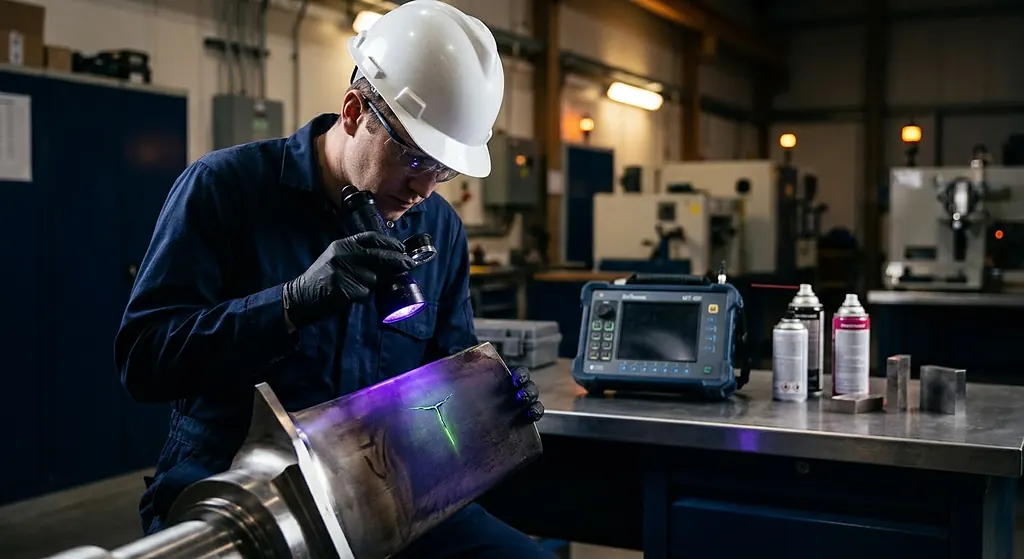
Non-Destructive Testing
Technique selection follows the component, material, expected damage mechanism and applicable acceptance criteria.
- 01Visual testing and condition mapping
- 02Liquid penetrant and magnetic-particle testing
- 03Ultrasonic thickness or flaw detection, where applicable
- 04Testing coordination, traceable records and indication mapping
- 05Evaluation against agreed codes, drawings or engineering limits

02
Destructive Testing Support
When representative samples are available, laboratory testing can validate material condition and support engineering decisions.
- 01Test-plan definition and laboratory coordination
- 02Tensile, hardness, impact or chemical testing as applicable
- 03Sample identification and chain-of-custody control
- 04Results review against material specifications
- 05Engineering interpretation linked to service history
03
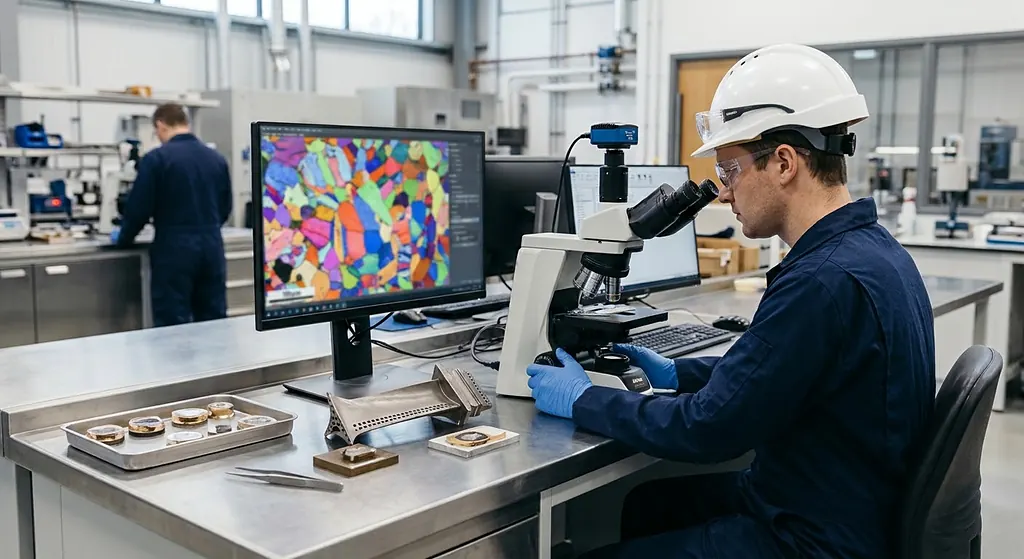
Metallurgical Analysis
Materials evidence is connected with loading, temperature, environment and operating history to clarify degradation mechanisms.
- 01Metallography and microstructure review
- 02Hardness and material-property assessment
- 03Fracture-surface and damage-mechanism evaluation
- 04Material verification and specification comparison
- 05Repairability, monitoring and replacement recommendations
Work with us
Plan your next outage, study or design with ERSSC.
Tell us about the asset, the objective and the constraints. We will respond with a clear scope and a practical way forward.